EZIDICA
EZIDICA
  • Culture and Folklore
  • Doctrine and Faith
  • Festivals and Ritual
  • Geography and Society
  • History
  • Important Figures
  • Religious Texts
Deutsch العربية
Tuesday, June 2, 2026
EZIDICA
English Deutsch العربية
EZIDICA
  • Culture and Folklore
  • Doctrine and Faith
  • Festivals and Ritual
  • Geography and Society
  • History
  • Important Figures
  • Religious Texts
English Deutsch العربية
Author

ezidica

ezidica

HistoryDoctrine and Faith

The Symbolism of the Sun in Ancient and Contemporary Beliefs: A Historical and Theological Study

by ezidica May 8, 2026
written by ezidica 4 minutes read
The Symbolism of the Sun in Ancient and Contemporary Beliefs: A Historical and Theological Study
Infobox: Solar Symbolism
Field: History of Religions / Anthropology
Prominent Deities: Ra, Shamash, Utu, Mithra
Associated Symbols: Solar cross, circle, winged disk
Current Religions: Yazidism, Mandaeism, Christianity symbolically

The Symbolism of the Sun in Ancient and Contemporary Beliefs: A Historical and Theological Study

Anthropological readings and the history of religions reveal a remarkable continuity of certain deeply ancient beliefs. Despite civilizational transformations, ancient religions such as Yazidism and Mandaeism have maintained their continuity and renewed their rituals into the modern era. Within the development of human religious thought, humanity moved from divine plurality toward the veneration of major cosmic phenomena, foremost among them the symbolism of the sun and the moon, as visible manifestations representing forces of pure goodness.

Mythological Roots: The Celestial Trinity and the Emergence of Light

Ancient mythology points to the concept of a “celestial trinity” composed of the moon, the sun, and Venus. In this system, the moon represents the “father,” the sun the “mother,” and Venus the “son.”

The priority of lunar fatherhood is based on an ancient philosophical conception that darkness was the original state prevailing in the universe, and from its womb light emerged. For this reason, the moon was regarded as the father of the sun, which represents its greatest radiance and its major manifestations in ancient beliefs.

The Solar Calendar and Major Festive Intersections

The cycle of the sun has been associated with many religious festivals and rituals throughout history. The sun reaches its lowest point in the Northern Hemisphere before December 22, then returns to appear at its peak on December 25.

  • Birthday of the Sun: It formed the historical basis for the birth celebrations of Jesus Christ and Ezida.
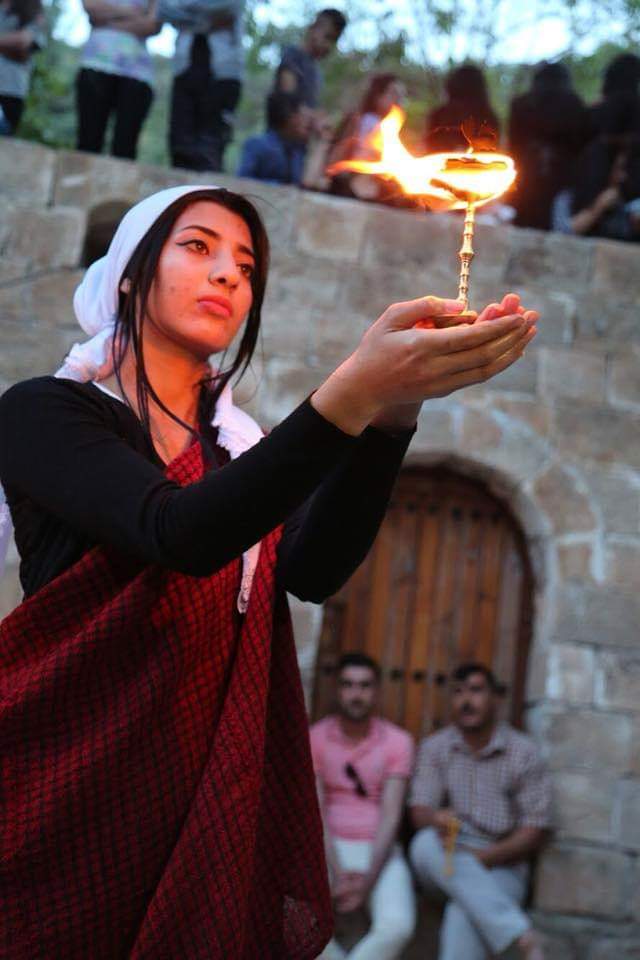
  • Belinda Festival: It represents the rebirth of the sun among Yazidis, during which fires are lit and sweets are distributed.
  • Civilizational Similarities: These rituals intersect with the celebrations of the Copts of Egypt and ancient festivals of light.

The Geographical Spread of Solar Veneration in Civilizations

Solar symbolism spread across various regions of the ancient world and appeared in diverse theological forms:

Civilization / Religion Name or Manifestation Theological Significance
Mesopotamia Utu / Shamash God of justice and truth
Ancient Egypt Ra / Amun Creator of life and source of power
Christianity Direction of the East / Sunday Symbolism of Christ’s resurrection and the Light of the World
Mithraism Mithra The unconquered sun

The Doctrinal Specificity of the Sun in Yazidism

In Yazidi theology, the sun is not worshipped as a physical entity, but is venerated as the “light of the heavens and the earth.” The sun is taken as a direction of prayer in the morning and evening, in symbolic orientation toward Paradise, which is believed to lie in the east.

Despite the importance of the Lalish Temple, turning toward the sun remains an expression of turning toward the absolute face of God. Researchers indicate that this veneration reflects the depth of ancient Mesopotamian and Mithraic influences that emphasized heavenly light.

Linguistic Semiotics and Geometric Symbols

The visual symbols expressing the sun in ancient arts were numerous:

  • The solar cross (+): An innate symbol of life and fertility, found since the fifth millennium BCE at the site of Arpachiyah.
  • The circle: Represents geometric perfection and infinity.
  • The serrated saw-like motif: A symbol appearing in Yazidi architecture in the courtyard of Lalish, referring to the rays of the sun.

The Cosmic and Physiological Dimension of the Sun

From the perspective of modern science, the sun constitutes 99% of the mass of the solar system. Its absence would mean the dominance of “entropy” and the complete cessation of life. This scientific reality reinforces the ancient human intuition that saw the sun as the fundamental engine of existence and a vital necessity for physiological and chemical formation.

Conclusion

Across the ages, the sun remains the greatest symbol of life and divine renewal. The close connection between cosmic light and the divine absolute confirms the view that the universe was created to serve humanity, enabling humans to perceive through it the greatness of their Creator.


References

  1. Al-Sawwāḥ, Firas. (1994). The Religion of Man: A Study of the Essence of Religion and the Origin of the Religious Impulse. Dar Alaa al-Din.
  2. Ali, Jawad. (2001). Al-Mufassal fi Tarikh al-Arab Qabl al-Islam / The Detailed History of the Arabs before Islam, Vol. 6. Dar al-Saqi.
  3. Frazer, James George. (1990). The Golden Bough: A Study in Magic and Religion. Dar al-Tali‘a.
  4. Habib, George. (1996). Yazidism: Remnants of an Ancient Religion. Dar Petra.
  5. Al-Majidi, Khazal. (1998). Incense of the Gods: A Study of Ancient Rituals and Worship. Al-Ahliyya Publishing.
  6. Jindy, Khalil. (1998). Towards Knowing the Truth of the Yazidi Religion. Dar al-Rashid.
May 8, 2026 0 comments
0 FacebookTwitterPinterestEmail
Important FiguresHistory

The Martyrdom of Archbishop Addai Scher: A Historical Reading of the Bassan and Tel Mishar Massacres

by ezidica May 8, 2026
written by ezidica 5 minutes read
The Martyrdom of Archbishop Addai Scher: A Historical Reading of the Bassan and Tel Mishar Massacres
  • SEO Slug: /martyrdom-of-archbishop-addai-scher/
  • Suggested URL: https://example.com/encyclopedia/martyrdom-of-archbishop-addai-scher/
  • Primary Keyword: martyrdom of Archbishop Addai Scher
  • Secondary Keywords: Bassan and Tel Mishar massacres, genocide, Chaldean Church, Osman Agha, Ottoman period.
  • Estimated Reading Time: 4 minutes
  • Keyword Density: ~1.8%

The Martyrdom of Archbishop Addai Scher: A Historical Reading of the Bassan and Tel Mishar Massacres

Infobox: The Martyrdom of Archbishop Addai Scher
Main Figure Archbishop Addai Scher, Chaldean scholar and historian
Date of Event 1915, late Ottoman period
Geographical Location Siirt Vilayet, Bassan region and the village of Tel Mishar
Parties Involved Ottoman forces, local tribal militias
Related Outcomes Execution of the archbishop; extermination of approximately 200 families in Tel Mishar

Introduction

This research article examines the historical circumstances surrounding the martyrdom of Archbishop Addai Scher, along with the systematic extermination campaigns that targeted Christians in the villages of Bassan and Tel Mishar at the hands of Ottoman forces and allied tribal groups. Archbishop Addai Scher was one of the most prominent religious and scholarly figures of his time, leaving behind a significant academic legacy.

This article relies on a cross-comparative methodology involving memoirs, eyewitness testimonies, and oral narratives in order to illuminate the complexities of the political and tribal landscape, while drawing on documented sources to understand the consequences of this dark period within the broader context of massacres against Christians.

Historical Background and Tribal Conflict

The campaigns of extermination against Christian communities escalated during the late Ottoman period, turning the archbishop into an explicit target of the authorities. Sources indicate that the archbishop attempted to survive by taking refuge in the mountains, where he sought protection from a local leader named “Osman Agha.”

Osman Agha showed commitment to protecting him, but complex tribal dynamics undermined these efforts. A rival family, represented by “Ismail Agha” and his two sons “Aqid” and “Rasul,” exploited the situation to settle political and tribal scores. In accordance with central orders calling for targeted persecution, “Aqid Agha” quickly informed the Ottoman authorities in the Vilayet of Siirt, which then sent a military detachment to arrest the archbishop.

Details of the Arrest and the Moral Position before the Martyrdom of Archbishop Addai Scher

Historical testimonies document an exceptional stance taken by the archbishop when Ottoman forces raided the residence of “Osman Agha.” Instead of hiding and exposing his hosts to abuse, he courageously surrendered himself, saying: “I am the one you are looking for; do not beat these innocent people.”

This was followed by a pivotal conversation between the archbishop and an educated Ottoman officer who spoke French. The officer offered to spare the archbishop’s life on the condition that he convert to Islam, an offer he firmly rejected. The archbishop justified his refusal through his spiritual responsibility toward his community and faith, preferring death over abandoning his principles.

Historical Accounts of the Martyrdom of Archbishop Addai Scher

The historical narratives documenting the archbishop’s final moments branch into several versions. They may be summarized and cross-examined to form a comprehensive picture of the event, as shown in the table below:

Account Sources Relied Upon Details of the Event
Armed Clash Father Jacques Rhétoré, citing Father Paulus Pero and Chorepiscopus Philips Shoriz An armed clash occurred between Ottoman security forces and the archbishop’s guards affiliated with Osman Agha. After the ammunition ran out, the archbishop was captured and shot dead.
March of Torture Edmond Laso and the survivor Esther The archbishop was subjected to physical and psychological torture, including the tearing out of his beard and beating with rifle butts. He was then taken on foot to the village of Tel Mishar and later to the area of “al-Ain,” where he was executed.
Betrayal of Military Orders Oral accounts of Osman Agha, transmitted by Abdo Bazer The officer agreed to the archbishop’s request to be executed by gunfire without torture and to be allowed to pray. A soldier disobeyed the orders and stabbed the archbishop. The account also includes the appearance of a “metaphysical light” descending upon the body.

The Bassan and Tel Mishar Massacres

The catastrophe did not stop with the assassination of the archbishop himself, but extended into mass killings. Historical documents point to a series of horrific events in the region:

  • The figure known as “Rasul Agha,” together with gendarmerie detachments, burned the village of Tel Mishar.
  • Approximately 200 Chaldean families from the unarmed population were exterminated.
  • Yazidi and Christian inhabitants who had taken refuge under the protection of sympathetic tribal leaders were eliminated.
  • All properties and lands belonging to the victims were systematically confiscated.

Conclusion

A cross-reading of documents and memoirs demonstrates that the martyrdom of Archbishop Addai Scher was not an isolated individual event, but a systematic act of elimination in which imperial orders intersected with tribal complicity. Although the details of his death vary between accounts of armed clash and torture, all narratives agree on his unwavering steadfastness and his sacrifice to save others.

The Bassan and Tel Mishar massacres also stand as evidence of the brutality of the genocide that struck minorities during that period, requiring continued research and documentation within studies of genocides in the Ottoman period.

References

  1. Courtois, Sébastien de (2004). The Forgotten Genocide: Eastern Christians, The Last Arameans. Gorgias Press, pp. 157-159.
  2. Gaunt, David (2006). Massacres, Resistance, Protectors: Muslim-Christian Relations in Eastern Anatolia during World War I. Gorgias Press, pp. 254-257.
  3. Lalish Journal (2015). Documented testimonies indicating the martyrdom of Archbishop Addai Scher. Lalish Academic Journal, Issue 44, p. 150.
  4. Naayem, Joseph (1920). Shall This Nation Die?. Chaldean Rescue, pp. 154-155.
  5. Rhétoré, Jacques (2005). Les chrétiens aux bêtes! Souvenirs de la guerre sainte proclamée par Turks contre les chrétiens en 1915. Éditions du Cerf, pp. 82-85.
  6. Yacoub, Joseph (2016). Year of the Sword: The Assyrian Christian Genocide, A History. Oxford University Press, pp. 128-129.
May 8, 2026 0 comments
0 FacebookTwitterPinterestEmail
غير مصنف

Customs and Traditions of Shingal: A Comprehensive Study of Yazidi Heritage and Beliefs

by ezidica May 8, 2026
written by ezidica 6 minutes read

Customs and Traditions of Shingal: A Comprehensive Study of Yazidi Heritage and Beliefs

General Information on Shingali Heritage
Geographical Region Shingal (Sinjar), Nineveh Governorate, Iraq
Main Community Yazidi community
Classification Folklore, social traditions, popular beliefs
Current Status Inherited and still partially practiced in the contemporary period
Related Topics Cultural anthropology, Iraqi folklore

The customs and traditions of Shingal (Sinjar) are a reflection of the natural human disposition and purity of intention that have characterized the inhabitants of this ancient region throughout history. The people of Shingal, especially within the Yazidi community, have preserved a set of traditions and beliefs inherited from their fathers and ancestors, which in turn formed a social and cultural system that organizes their daily life.

These inherited traditions vary widely, encompassing etiquette in gatherings, rituals related to natural phenomena, and methods of warding off psychological and physical harm. Despite modern development, many of these customs remain strongly present, reflecting deep cultural rootedness, a love of goodness, and simplicity of life.

Social Etiquette and Rules of Conduct in Shingali Society

Shingali society is marked by a positive strictness regarding mutual respect and daily social manners. These values appear in several inherited social practices, most notably:

Hospitality Etiquette and Welcoming Neighbors

  • Coffee-drinking etiquette: Coffee is considered a symbol of hospitality. One of the rules of serving and drinking it is that it must be taken exclusively with the right hand; using the left hand is considered a lack of respect for both the coffee and the host. The server continues pouring coffee until the guest shakes the cup as a sign of having had enough.
  • The “Nazla” initiative for a new neighbor: When a new family moves into the neighborhood, older neighbors take the initiative to send a tray of food called “Nazla.” This gesture continues among the houses of the neighborhood as a way of honoring the new neighbor and strengthening social ties.
  • Signs of a guest’s arrival: People believe in folkloric signs that announce the arrival of guests, such as a child sweeping the floor, a spider descending from the ceiling, or birds chirping around the house.

Respect for Elders and Traditions of Gatherings

  • Avoiding smoking in front of elders: Out of respect for fathers and older brothers, sons refrain from smoking in their presence. A smoker immediately puts out his cigarette when someone older enters, even if the son has his own independent household.
  • Standing up for those who enter: In Shingali diwans and guest houses, it is a firmly established tradition for everyone seated to rise when someone enters, especially if the person is elderly, as a gesture of respect and appreciation.
  • Manner of sitting: Stretching one’s feet toward another person or pointing the sole of a shoe toward them in gatherings is considered inappropriate behavior and contrary to the norms of mutual respect.

Folkloric and Spiritual Beliefs among the Yazidis

Popular beliefs form an inseparable part of the customs and traditions of Shingal, as they offer explanations for phenomena and are linked to mechanisms of psychological and spiritual protection.

Rituals Related to Birth and Children

  • The fate of the umbilical cord: The newborn’s umbilical cord is thrown near schools or sacred places in the hope that the child will become educated or righteous in the future.
  • Meanings of the newborn’s palm: It is believed that a newborn who opens his or her palm at birth will be generous, while a closed hand indicates stinginess.
  • Treating children’s crying: Families may turn to sheikhs of the Amadin class to calm a child who cries excessively, believing that receiving blessing through the sheikh’s saliva grants the child peace and calm.
  • Seeking offspring: Women who experience delayed childbirth visit the shrine of “Khidr Ilyas” to seek blessing and pray for relief from hardship.

Methods of Warding Off Envy and the Evil Eye — “Fidwa”

Shingali society places great importance on protection from envy and evil spirits through practices such as:

  • Offering Fidwa: Sheep or chickens are slaughtered, or eggs are broken, when valuable possessions such as a house or car are purchased, in order to avert misfortune.
  • Melting lead: A child believed to be afflicted by the “evil eye” is treated by melting lead and pouring it into water above the child’s head to nullify the effect of envy.
  • The blue bead and the wolf’s head: Blue ceramic pieces are built into house walls, or doors are painted blue. A wolf’s head may also be hung at entrances to repel jinn and envy.

Interpreting Natural Phenomena and Confronting Bad Omens

  • The rule of breaking things: To avoid bad luck when something is accidentally broken, two additional useless items are intentionally broken so that the total becomes three, which is believed to cancel the bad omen.
  • Lunar eclipse: During an eclipse, children go out to beat metal pots and chant folk songs such as “O whale, pass away from the moon” until the phenomenon ends.
  • Falling meteors: The fall of a meteor, called “Ster Rishyan,” is interpreted as a warning or bad omen indicating the approaching death of someone in the region.
  • Pessimism about Saturday: Holding mourning gatherings on Saturday is avoided. If burial becomes necessary, an egg accompanies the deceased as a symbol of the “soul” to cut off the chain of death, based on the belief that Saturday is the day of the creation of “earth/soil.”

Comparative Table: Classification of Beliefs and Traditions in Shingal

Classification Examples from Shingali Heritage Social / Psychological Significance
Social and Ethical Traditions Respect for elders, the Nazla initiative, coffee etiquette Strengthening solidarity and reinforcing hierarchical and communal respect
Protective and Preventive Rituals The blue bead, Fidwa, melting lead Psychological reassurance and warding off anxiety about the unknown and envy
Beliefs Related to Birth and Children Where the umbilical cord is thrown, the newborn’s palm Hope for a bright future for the new generation
Interpretation of Natural Phenomena Eclipse chants, meteors as omens An attempt to understand cosmic patterns and adapt to their awe

References

  • Saad Salloum, (2021), Return to Sinjar, International Organization for Migration (IOM Iraq), pp. 10–12.
  • Dr. Saeed Diwa Ji, (1973), Yazidism, Arab Institution for Studies and Publishing, p. 150.
  • Abdul Razzaq al-Hasani, (1980), The Yazidis in Their Present and Past, Al-Maktaba al-Asriyya, Sidon, p. 112.
  • Dr. Ali al-Wardi, (1965), A Study in the Nature of Iraqi Society, Al-Ani Press, Baghdad, pp. 210, 254.
  • Dr. Khalil Jindy, (1998), Towards Knowing the Truth of the Yazidi Religion, Rabita Press, Sweden, pp. 95, 182.
May 8, 2026 0 comments
0 FacebookTwitterPinterestEmail
Geography and SocietyCulture and FolkloreHistoryImportant Figures

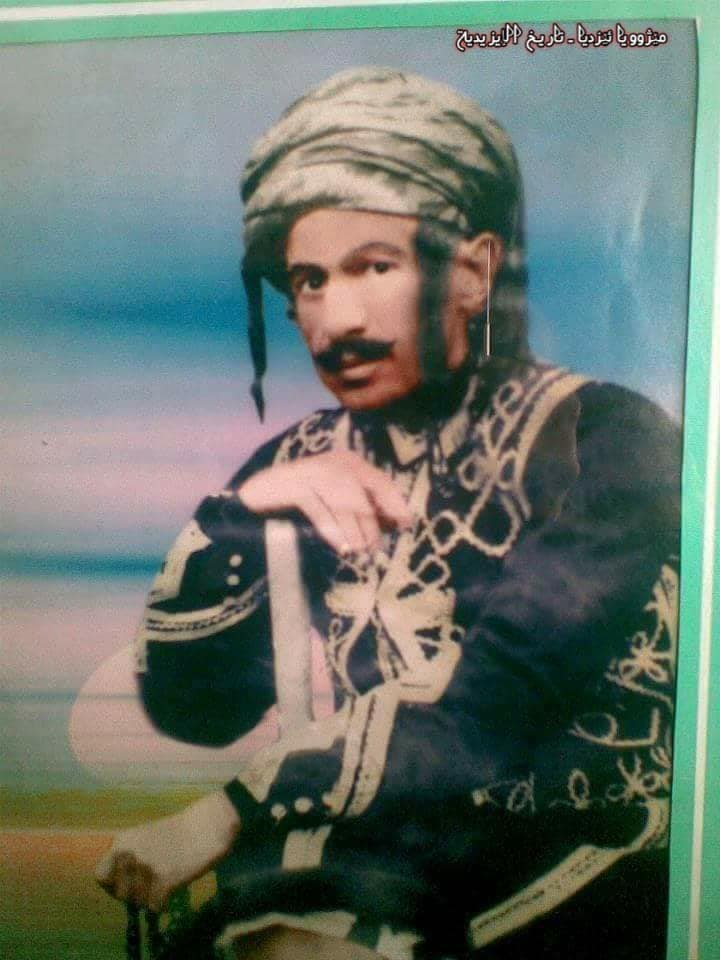
Safouk Dombly and Ali Ramo: A Study of the Tribal Protection Institution in the Late Ottoman Period

by ezidica May 8, 2026
written by ezidica 6 minutes read
Safouk Dombly and Ali Ramo: A Study of the Tribal Protection Institution in the Late Ottoman Period
Historical Event Information
Time Period Second half of the 19th century, around 1885 CE
Geographical Location Tora Hverka, Mount Shingal / Sinjar
Main Figures Ali Ramo, tribal leader; Safouk Dombly, Yazidi leader
Political Context Power vacuum after the fall of the Bohtan Emirate in 1847 CE
Outcomes Ottoman pardon for Ali Ramo; Safouk Dombly received the rank of “Pasha”

Safouk Dombly and Ali Ramo: A Study of the Tribal Protection Institution in the Late Ottoman Period

This academic article highlights the political and social dynamics witnessed in the region of “Tora Hverka” and Mount Shingal / Sinjar during the second half of the nineteenth century. It takes the incident of a tribal leader seeking refuge — specifically the story of Safouk Dombly and Ali Ramo — as a central case for understanding the mechanisms of the tribal protection institution and how it transcended religious differences. The article also analyzes the consequences of the fall of the Bohtan Emirate in 1847 CE on the structure of power, leading to political settlements with the Ottoman authorities.

The Power Vacuum in Tora Hverka after 1847

The defeat of the Emir of Jazira Bohtan, Bedir Khan Beg, by the Ottoman army in 1847 CE marked a decisive turning point in the region’s geopolitical structure. The collapse of the central emirate led to fragmentation and intense competition among tribes that had previously been allied, resulting in a severe power vacuum in the “Tora Hverka” region.

Within this historical context, fierce internal struggles for leadership emerged. The authority of the “Al Sheikha” family — one of the first families to lead the Hverkan confederation — faded until only its historical trace remained, making way for new tribal forces seeking to impose their influence in the region through dealings with the Ottoman authorities.

Leadership Transformations: The Rise and Decline of Ali Ramo’s Family

Amid this tribal rivalry, the family of “Ali Ramo,” belonging to the “Arabiyan” tribe, one of the sub-tribes, emerged prominently. Thanks to his leadership qualities and personal charisma marked by bravery and chivalry, Ali Ramo was able to expand his influence to include other tribes in the region.

However, tribal authority is fluid and constantly changing. Ali Ramo’s family gradually began to lose its dominance to the “Al Osman” family, belonging to the “Ilikan” tribe. With the rise of prominent figures such as “Osman,” then his son “Hajo I,” and later “Hasan I,” who expanded his influence beyond the tribal sphere, authority in the Hverkan region remained divided between the two families for a long period.

Despite this decline in direct influence, Ali Ramo retained high social prestige and moral authority. This status enabled him to act as a mediator in resolving internal disputes that arose among the branches of the Al Osman tribe, many of whom still maintained loyalty to the family of Ali Ramo.

The Refuge Crisis: The Meeting of Safouk Dombly and Ali Ramo in Mount Shingal

Escalating disputes among the sons of the Al Osman tribe on one hand, and between them and the Ottoman government on the other, weakened the tribal structure in general. Around 1885 CE, Ali Ramo found himself in direct confrontation with the Ottoman authorities, forcing him to flee and seek a safe refuge.

Ali Ramo chose to take refuge in Mount Shingal, specifically in the village of “Tiraf,” inhabited by the Masqura Janabiya tribe. He placed himself under the protection of its leader, “Safouk Mato Hussein,” historically known as “Safouk Dombly Pasha.” Safouk had wide political influence and strong relations with the Ottoman administration at the time, making the meeting between Safouk Dombly and Ali Ramo a turning point in the course of events.

Oral memory records an incident of deep social significance that coincided with Ali Ramo’s arrival: a child from Safouk Dombly’s grandchildren died that night. Ali Ramo was deeply affected and wept bitterly, explaining to his host and ally, Safouk, that his tears were a lament for the misfortune of his arrival coinciding with a grave event in his host’s household. This reflects the moral sensitivity of the guest’s position within tribal custom.

Safouk Dombly’s Diplomatic Position and the Ottoman Settlement

Safouk Dombly’s response to the crisis of his “dakhil” — the person under his protection — represents an advanced model of risky tribal diplomacy. After hosting Ali Ramo for some time, Safouk made the bold decision to negotiate with the higher Ottoman authorities to end the crisis of his ally.

The symbolism of this stance appeared in Safouk taking two companions with him and carrying a “white cloth” as a shroud. He presented an unconventional political offer to the Ottoman administration: to offer his own head in place of the head of his protected guest, Ali Ramo. His message carried a profound humanitarian and social approach, as he pointed to his moral obligation to protect a “Muslim” refugee while he himself was a “Yazidi” leader. He insisted on either issuing a full pardon for the protected guest or executing him instead, in strict commitment to the laws of the institution of tribal protection.

Historical Results and Consequences

This political maneuver, marked by courage and strict adherence to the customs of tribal protection, produced key outcomes in the history of the region:

  • Sultanic Pardon: The Ottoman authorities showed admiration and appreciation for Safouk Dombly’s position, which led to an official decision to pardon Ali Ramo.
  • Political Promotion: Safouk Dombly was officially granted the rank of “Pasha” over all of Mount Shingal, strengthening his administrative and political status within the state.
  • Demographic Stability: Ali Ramo preferred to remain in Shingal, where he brought one of his wives and settled there. He had sons, Hussein and Shaaban, performed the Hajj pilgrimage, and remained in the region until his death.

Ali Ramo was buried in the “al-Hasanki” cemetery in the village of “Haliqi,” north of Mount Shingal. His family descendants still exist in Shingal and the Kurdistan Region of Iraq to this day.

Comparison of Tribal Powers in Tora Hverka

Leading Family Parent Tribe Prominent Historical Figures Outcome of Power and Influence
Al Sheikha Former Hverkan confederation Not precisely identified in this period Their authority faded, and their role was reduced to historical memory.
Al Ali Ramo Arabiyan tribe Ali Ramo Direct influence declined; they shifted to a mediating role and later settled in Shingal.
Al Osman Ilikan tribe Osman, Hajo I, Hasan I Expanded influence beyond the tribal sphere and later dominated the region.

References

  1. Mousa, Ghada (2025). The Kurdish-Ottoman Conflict and the End of the Kurdish Emirates Era. Al-Mubadara Center for Studies and Research. Link: almoubadara.com
  2. Haruri, Salah (2000). The Bohtan Emirate during the Reign of Emir Bedir Khan. Khani Press, Duhok, p. 47.
  3. Jabbo, Nazir (2018). The Sultans of Hverkan: A Page from Kurdish History.
  4. Mahmoud, Ibrahim (2020). The Kurdish State of Hajo Agha.
May 8, 2026 0 comments
0 FacebookTwitterPinterestEmail
Geography and SocietyImportant Figures

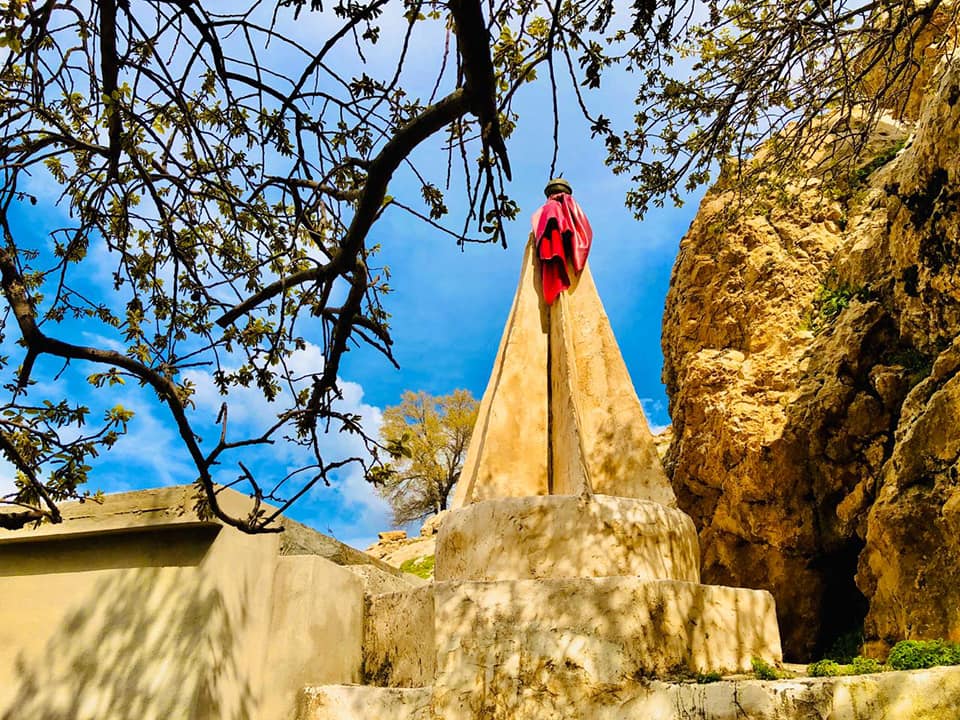
Kor Bmbark Shrine and Valley in Mount Sinjar: Historical and Religious Significance

by ezidica May 8, 2026
written by ezidica 6 minutes read
Kor Bmbark Shrine and Valley in Mount Sinjar: Historical and Religious Significance

Kor Bmbark Shrine and Valley in Mount Sinjar: Historical and Religious Significance

Infobox: Kor Bmbark Shrine and Valley
Official Name Kor Bmbark Shrine and Valley (Kli Kor Bmbark)
Geographical Location Northeastern side of Mount Sinjar
Religious Affiliation Yazidi Religion
Spiritual Figure Saint Sharaf al-Din
Custodianship and Administration Babiri Family (descendants of Ismail Salih Agha) – al-Mutarbiya Tribe
Main Landmarks Qola Kor Caves, Treasury of Sharaf al-Din, Treasury of the Sacred Cloak, Bakra Tribe Cemetery

Mount Sinjar represents the historical and spiritual stronghold of the followers of the Yazidi religion, where rugged geography intertwines with religious sanctity to form a safe refuge throughout history. Among the most important landmarks embodying this complex relationship is the Kor Bmbark Shrine and Valley, which stands as one of the region’s most prominent sacred sites. This article sheds light on the geographical, religious, and social significance of the location, relying on topographical data and oral traditions preserved within collective memory.

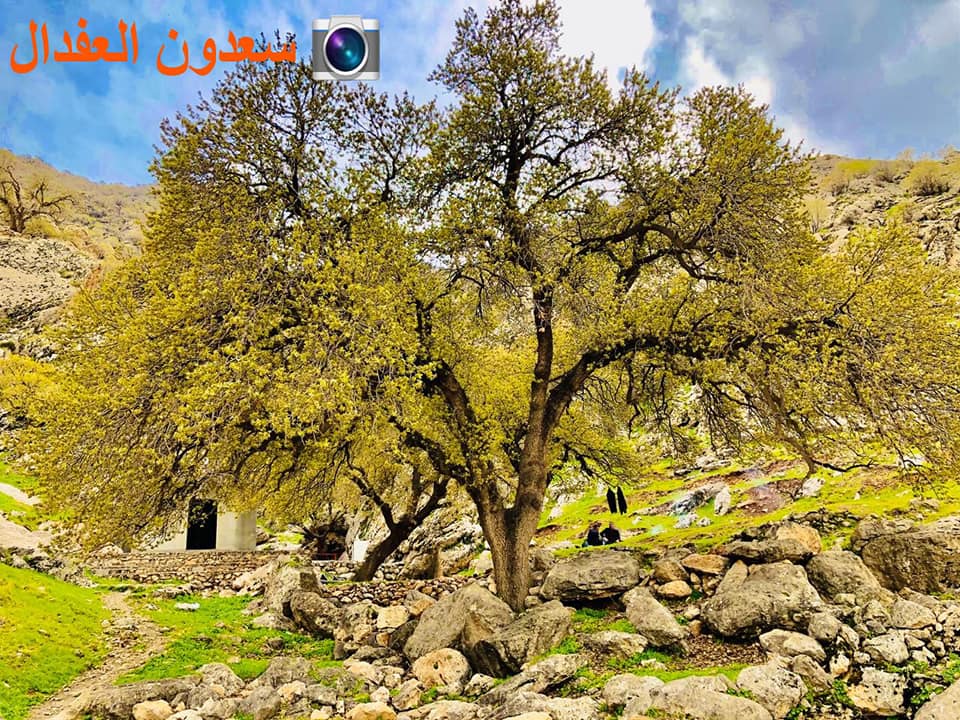
The Geographical and Environmental Context of Kor Bmbark Shrine and Valley

The valley occupies a strategic and vital position on the northeastern side of Mount Sinjar. It is bordered by the village of “Osfa” to the west and the village of “Bakra” to the east. The valley is distinguished by unique topographical and environmental features that historically contributed to the protection of its inhabitants.

Geological Formation and Natural Shelters

The valley contains a complex network of deep and fortified caves. The “Qola Kor” caves are among the most famous locally, notable for their vast capacity to shelter thousands of people. Due to the difficulty of accessing them except through rugged and narrow paths, the geography played a significant defensive role, providing safe havens for local communities during invasions and historical genocidal campaigns.

Biodiversity and Vegetation Cover

The valley enjoys high fertility and remarkable biodiversity. The site is rich in dense tree cover, including various fruit-bearing trees alongside forest species characteristic of the mountain environment. Among its most notable trees are:

  • Fig, apple, and grape trees.
  • Dense oak forests.
  • A variety of mountain plants known for medicinal properties.

Religious and Spiritual Importance in Yazidi Consciousness

The Kor Bmbark Shrine and Valley possess exceptional sanctity rooted in profound historical and spiritual foundations within Yazidi heritage.

Historical Connection to Saint “Sharaf al-Din”

Oral traditions affirm that this valley served as a settlement and refuge for Saint “Sharaf al-Din” and his followers approximately eight centuries ago before they moved toward western regions. As a result, the valley is regarded as an authentic spiritual extension of his shrine located in the village of “al-Rashid,” granting the site a deep aura of holiness and reverence.

Ritual Treasuries and Sacred Storehouses

The geographical depths of the valley contain ritual storehouses known as “Khaznat” (treasuries), reflecting the organized nature of devotional practices. The following table highlights the most prominent treasuries and their ritual significance:

Name of Sacred Treasury Function and Ritual Importance
Treasury of Sharaf al-Din Dedicated to collecting vows and monetary donations offered by visitors and believers, locally referred to as (al-Dahik).
Treasury of the Sacred Cloak Functions as a secure repository for preserving aged sacred religious items (such as remains of sacred cloaks and old ritual fabrics) to protect them from damage or desecration.

Social Practices and Environmental Taboos

The religious sanctity of the valley established a strict system of customary laws and environmental taboos regulating the relationship between humans and nature, particularly concerning agricultural resources and fruit-bearing trees within the valley:

  • Prohibition of Commercial Exploitation: Harvesting fruits for sale in markets or financial profit is strictly forbidden.
  • Prohibition of External Transport: Visitors and residents are not permitted to take fruits outside the boundaries of the valley.
  • On-site Consumption and Blessing: Fruits may only be consumed within the valley, where they are believed to be “sacred fruits” possessing healing spiritual and physical properties.

Architectural Development and Administration of Kor Bmbark Shrine

The religious monument known as the “Kor Bmbark Shrine” is located at the main entrance of the valley. This sacred structure has undergone multiple stages of architectural and administrative development.

Stages of Architectural Development

During the early period associated with the settlement of Saint “Sharaf al-Din,” the shrine consisted of a simple stone chamber built with modest geometric design. In later periods, the site witnessed notable architectural development, including the construction of a traditional Yazidi religious dome above the original structure. This expansion relied heavily on charitable donations from Yazidis, particularly contributions from members of the “Bakra” tribe.

Custodianship and Shrine Administration

The Babiri family, specifically the descendants of “Ismail Salih Agha” from the “al-Mutarbiya” tribe, are responsible for serving and maintaining the shrine, a role traditionally referred to as custodianship (Sadana). This family is regarded as the legitimate guardian entrusted with preserving the heritage of Saint Sharaf al-Din since his departure from the region.

Historic Cemetery and Associated Landmarks

The western side of the shrine contains a historic cemetery belonging to the “Bakra” tribe. The cemetery derives its importance from being the burial place of several prominent figures in Yazidi history, most notably the well-known religious and social figure “Osi Dogho.”

Conclusion

The Kor Bmbark Shrine and Valley represent a unique and integrated example of the fusion between geographical environment and religious belief in the Middle East. It served not only as a physical refuge protecting inhabitants through its fortified caves against successive threats, but also as a spiritual sanctuary and institution that preserved the identity, collective memory, and oral heritage of the Yazidi religion for hundreds of years.

References

  1. Açikyildiz, Birgül. (2010). The Yezidis: The History of a Community, Culture and Religion. I.B. Tauris.
  2. Fuccaro, Nelida. (1999). The Other Kurds: Yazidis in Colonial Iraq. I.B. Tauris.
  3. Guest, John S. (1993). Survival Among the Kurds: A History of the Yezidis. Routledge.
  4. Kreyenbroek, Philip G. (1995). Yezidism: Its Background, Observances and Textual Tradition. Edwin Mellen Press.
  5. Drower, E. S. (1941). Peacock Angel: Being Some Account of Votaries of a Secret Cult and Their Sanctuaries. John Murray.
90516227 3597314297010485 6119393657297567744 n
May 8, 2026 0 comments
0 FacebookTwitterPinterestEmail
Culture and FolkloreGeography and Society

The Socio-Cultural and Religious Dimensions of the Yezidi Shilk Dish | An Anthropological Study

by ezidica May 8, 2026
written by ezidica 5 minutes read
The Socio-Cultural and Religious Dimensions of the Yezidi Shilk Dish | An Anthropological Study
SEO Meta Data Information
  • Main Keyword: Yezidi Shilk Dish
  • Secondary Keywords: Yezidi folkloric cuisine, Yezidi heritage, Yezidi culture, socio-religious meanings, traditional dishes
  • Suggested URL: /yezidi-folklore-kitchen-shilk-dish/
  • Estimated Reading Time: 3 minutes
  • Keyword Density: ~1.8%

The Socio-Cultural and Religious Dimensions in Yezidi Folkloric Cuisine: An Anthropological Study of the Yezidi Shilk Dish

Fact Sheet: The Yezidi Shilk Dish
Name Shilk Dish (Shilk)
Geographical Region Yezidi-inhabited regions
Main Ingredients Flour, water, salt, animal ghee (Duhni Bez), honey or molasses
Anthropological Classification Traditional folkloric dish / Ritual and religious food
Main Seasons Spring, late autumn, winter, and religious occasions

The civilizational and social heritage of peoples represents an accurate mirror reflecting their historical and cultural identity. Within Yezidi society, folklore and popular heritage occupy a special place that actively contributes to preserving collective memory. “Yezidi cuisine” is considered one of the most prominent manifestations of this ancient heritage, rich with folkloric dishes rooted in deep historical traditions, for which it is difficult to find precise equivalents outside the framework of the language and Yezidi culture. This article seeks to shed light on the Yezidi Shilk dish as a cultural and anthropological phenomenon that goes beyond being merely a daily food.

This dish constitutes a central element carrying sacred meanings, social functions, and vital rituals closely linked to the environmental, economic, and living conditions of Yezidi society throughout history.

The Structural Characteristics and Preparation Methods of the Yezidi Shilk Dish

The Yezidi Shilk dish is classified among ancient traditional dishes created by the collective social mind to adapt to harsh living and economic conditions. This innovation relied on the principle of “resource economy” while fully preserving high nutritional value. The dish is distinguished by its simple ingredients, ease of preparation, and digestibility.

Methodological Preparation Steps

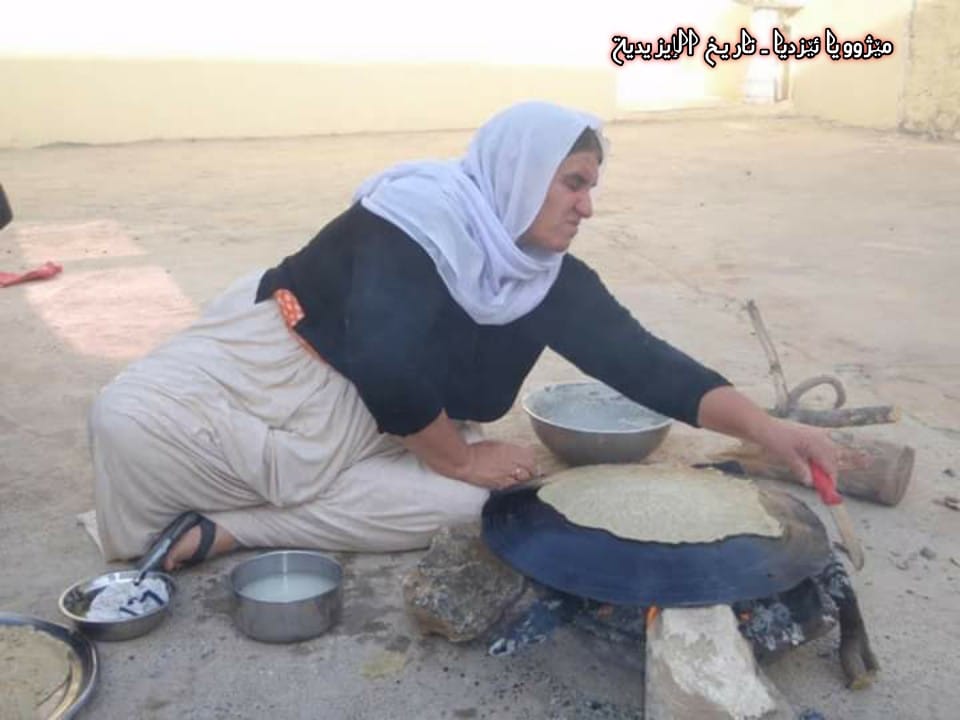
  • Preparing the basic ingredients: The dough consists exclusively of flour, water, and salt, without the use of any yeast. The water ratio should be higher than the flour ratio to obtain a light and liquid consistency.
  • Preparing the cooking tools: Firewood is ignited, and the metal saj (griddle) is placed over the hearth stones. To prevent the bread from burning, the underside of the saj is coated with a thin layer of dough mixed with ash, while the upper surface is greased to prevent sticking.
  • The baking process: A measured amount of liquid dough is poured onto the hot saj and spread evenly. Once the first side is cooked, the bread is gently flipped to cook the other side.
  • Complementary serving: After the Shilk breads are cooked, pure animal ghee (Duhni Bez) is added, and they are sweetened with honey, molasses, or sugar. They are served as a hot, energy-rich meal and are commonly consumed during spring, winter, and late autumn.

Functional Classification and Socio-Religious Meanings

The function of the Shilk dish is not limited to daily nutritional consumption; rather, it intersects with multiple temporal and spatial contexts that grant it ritualistic, protective, and healing dimensions of great importance. The following table illustrates the functional classifications of the dish according to the social and religious context within the framework of Yezidi beliefs:

Type of Dish (Ritual Context) Time / Place Socio-Cultural Meaning and Function
“Sheikh Mishlah” Shilk Upon returning from the Lalish Nurani Temple (during the Jema festival days). Spiritual and commemorative function: Prepared by the lady of the house as a ritual of gratitude to God for a safe return and in honor of the memory of “Sheikh Mishlah.”
“Sheikh Mand” Shilk At the beginning of May each year. Protective function: Prepared by livestock owners and farmers for protection against snakes, in association with “Sheikh Mand” (guardian/deity of snakes).
“Kojrati” Shilk During nomadic migration and tent setup (black tents). Spatial and blessing-related function: A ritual accompanying settlement in a new location to ward off evil and bring blessings to the tribe and livestock.
“Postpartum” Shilk The postpartum period (forty days after childbirth). Healing function: Given to new mothers within traditional folk medicine practices due to its digestibility and nutritional value in restoring the body and relieving uterine pain.
“Belinda Bira” Shilk On the eve of the “Belinda Bira” feast and in cemeteries. Celebratory and funerary function: Served to farmers in the morning and taken to cemeteries as “provisions for the dead” (a historical practice that is gradually declining).

Conclusion

The study of folkloric cuisine, through the Yezidi Shilk dish as a living example, demonstrates that food in ancient societies is not merely a biological necessity for survival, but rather an integrated symbolic system. This system documents the beliefs of society, its history, and its continuous methods of adaptation to the surrounding environment. The continuity of preparing this dish and its close association with religious and social rituals prove the resilience of Yezidi cultural identity and adherence to authenticity despite various challenges.

References

  1. Allison, C. (2001). The Yezidi Oral Tradition in Iraqi Kurdistan. Routledge.
  2. Douglas, M. (1972). Deciphering a Meal. Daedalus, 101(1), 61–81.
  3. Kreyenbroek, P. G. (1995). Yezidism: Its Background, Observances and Textual Tradition. Edwin Mellen Press.
May 8, 2026 0 comments
0 FacebookTwitterPinterestEmail

Recent Posts

  • The Symbolism of the Sun in Ancient and Contemporary Beliefs: A Historical and Theological Study
  • The Martyrdom of Archbishop Addai Scher: A Historical Reading of the Bassan and Tel Mishar Massacres
  • Customs and Traditions of Shingal: A Comprehensive Study of Yazidi Heritage and Beliefs
  • Safouk Dombly and Ali Ramo: A Study of the Tribal Protection Institution in the Late Ottoman Period
  • Kor Bmbark Shrine and Valley in Mount Sinjar: Historical and Religious Significance

Recent Comments

No comments to show.

Social Networks

Quote

Even classical buildings can spark debate within their own tradition.

Categories

غير مصنف Doctrine and Faith Culture and Folklore History Geography and Society Important Figures

Popular Posts

  • 1

    The Socio-Cultural and Religious Dimensions of the Yezidi Shilk Dish | An Anthropological Study

    May 8, 2026
  • 2

    Kor Bmbark Shrine and Valley in Mount Sinjar: Historical and Religious Significance

    May 8, 2026
  • 3

    Safouk Dombly and Ali Ramo: A Study of the Tribal Protection Institution in the Late Ottoman Period

    May 8, 2026
  • 4

    The Symbolism of the Sun in Ancient and Contemporary Beliefs: A Historical and Theological Study

    May 8, 2026
  • 5

    Customs and Traditions of Shingal: A Comprehensive Study of Yazidi Heritage and Beliefs

    May 8, 2026

Newsletter

Ezidica

  • العربيةالعربية
  • DeutschDeutsch
  • EnglishEnglish
  • About Us
  • Terms of Use
  • Privacy Policy
Facebook-f Youtube Tiktok Instagram Pinterest-p

© 2026 موسوعة الإيزيدية – Encyclopædia Ezidica. جميع الحقوق محفوظة.

EZIDICA
  • Culture and Folklore
  • Doctrine and Faith
  • Festivals and Ritual
  • Geography and Society
  • History
  • Important Figures
  • Religious Texts