


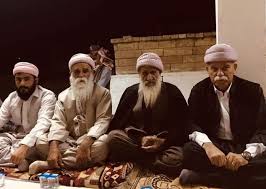
Customs and Traditions of Shingal: A Comprehensive Study of Yazidi Heritage and Beliefs
| General Information on Shingali Heritage | |
|---|---|
| Geographical Region | Shingal (Sinjar), Nineveh Governorate, Iraq |
| Main Community | Yazidi community |
| Classification | Folklore, social traditions, popular beliefs |
| Current Status | Inherited and still partially practiced in the contemporary period |
| Related Topics | Cultural anthropology, Iraqi folklore |
The customs and traditions of Shingal (Sinjar) are a reflection of the natural human disposition and purity of intention that have characterized the inhabitants of this ancient region throughout history. The people of Shingal, especially within the Yazidi community, have preserved a set of traditions and beliefs inherited from their fathers and ancestors, which in turn formed a social and cultural system that organizes their daily life.
These inherited traditions vary widely, encompassing etiquette in gatherings, rituals related to natural phenomena, and methods of warding off psychological and physical harm. Despite modern development, many of these customs remain strongly present, reflecting deep cultural rootedness, a love of goodness, and simplicity of life.
Social Etiquette and Rules of Conduct in Shingali Society
Shingali society is marked by a positive strictness regarding mutual respect and daily social manners. These values appear in several inherited social practices, most notably:
Hospitality Etiquette and Welcoming Neighbors
- Coffee-drinking etiquette: Coffee is considered a symbol of hospitality. One of the rules of serving and drinking it is that it must be taken exclusively with the right hand; using the left hand is considered a lack of respect for both the coffee and the host. The server continues pouring coffee until the guest shakes the cup as a sign of having had enough.
- The “Nazla” initiative for a new neighbor: When a new family moves into the neighborhood, older neighbors take the initiative to send a tray of food called “Nazla.” This gesture continues among the houses of the neighborhood as a way of honoring the new neighbor and strengthening social ties.
- Signs of a guest’s arrival: People believe in folkloric signs that announce the arrival of guests, such as a child sweeping the floor, a spider descending from the ceiling, or birds chirping around the house.
Respect for Elders and Traditions of Gatherings
- Avoiding smoking in front of elders: Out of respect for fathers and older brothers, sons refrain from smoking in their presence. A smoker immediately puts out his cigarette when someone older enters, even if the son has his own independent household.
- Standing up for those who enter: In Shingali diwans and guest houses, it is a firmly established tradition for everyone seated to rise when someone enters, especially if the person is elderly, as a gesture of respect and appreciation.
- Manner of sitting: Stretching one’s feet toward another person or pointing the sole of a shoe toward them in gatherings is considered inappropriate behavior and contrary to the norms of mutual respect.
Folkloric and Spiritual Beliefs among the Yazidis
Popular beliefs form an inseparable part of the customs and traditions of Shingal, as they offer explanations for phenomena and are linked to mechanisms of psychological and spiritual protection.
Rituals Related to Birth and Children
- The fate of the umbilical cord: The newborn’s umbilical cord is thrown near schools or sacred places in the hope that the child will become educated or righteous in the future.
- Meanings of the newborn’s palm: It is believed that a newborn who opens his or her palm at birth will be generous, while a closed hand indicates stinginess.
- Treating children’s crying: Families may turn to sheikhs of the Amadin class to calm a child who cries excessively, believing that receiving blessing through the sheikh’s saliva grants the child peace and calm.
- Seeking offspring: Women who experience delayed childbirth visit the shrine of “Khidr Ilyas” to seek blessing and pray for relief from hardship.
Methods of Warding Off Envy and the Evil Eye — “Fidwa”
Shingali society places great importance on protection from envy and evil spirits through practices such as:
- Offering Fidwa: Sheep or chickens are slaughtered, or eggs are broken, when valuable possessions such as a house or car are purchased, in order to avert misfortune.
- Melting lead: A child believed to be afflicted by the “evil eye” is treated by melting lead and pouring it into water above the child’s head to nullify the effect of envy.
- The blue bead and the wolf’s head: Blue ceramic pieces are built into house walls, or doors are painted blue. A wolf’s head may also be hung at entrances to repel jinn and envy.
Interpreting Natural Phenomena and Confronting Bad Omens
- The rule of breaking things: To avoid bad luck when something is accidentally broken, two additional useless items are intentionally broken so that the total becomes three, which is believed to cancel the bad omen.
- Lunar eclipse: During an eclipse, children go out to beat metal pots and chant folk songs such as “O whale, pass away from the moon” until the phenomenon ends.
- Falling meteors: The fall of a meteor, called “Ster Rishyan,” is interpreted as a warning or bad omen indicating the approaching death of someone in the region.
- Pessimism about Saturday: Holding mourning gatherings on Saturday is avoided. If burial becomes necessary, an egg accompanies the deceased as a symbol of the “soul” to cut off the chain of death, based on the belief that Saturday is the day of the creation of “earth/soil.”
Comparative Table: Classification of Beliefs and Traditions in Shingal
| Classification | Examples from Shingali Heritage | Social / Psychological Significance |
|---|---|---|
| Social and Ethical Traditions | Respect for elders, the Nazla initiative, coffee etiquette | Strengthening solidarity and reinforcing hierarchical and communal respect |
| Protective and Preventive Rituals | The blue bead, Fidwa, melting lead | Psychological reassurance and warding off anxiety about the unknown and envy |
| Beliefs Related to Birth and Children | Where the umbilical cord is thrown, the newborn’s palm | Hope for a bright future for the new generation |
| Interpretation of Natural Phenomena | Eclipse chants, meteors as omens | An attempt to understand cosmic patterns and adapt to their awe |
References
- Saad Salloum, (2021), Return to Sinjar, International Organization for Migration (IOM Iraq), pp. 10–12.
- Dr. Saeed Diwa Ji, (1973), Yazidism, Arab Institution for Studies and Publishing, p. 150.
- Abdul Razzaq al-Hasani, (1980), The Yazidis in Their Present and Past, Al-Maktaba al-Asriyya, Sidon, p. 112.
- Dr. Ali al-Wardi, (1965), A Study in the Nature of Iraqi Society, Al-Ani Press, Baghdad, pp. 210, 254.
- Dr. Khalil Jindy, (1998), Towards Knowing the Truth of the Yazidi Religion, Rabita Press, Sweden, pp. 95, 182.