

| Historical Event Information | |
|---|---|
| Time Period | Second half of the 19th century, around 1885 CE |
| Geographical Location | Tora Hverka, Mount Shingal / Sinjar |
| Main Figures | Ali Ramo, tribal leader; Safouk Dombly, Yazidi leader |
| Political Context | Power vacuum after the fall of the Bohtan Emirate in 1847 CE |
| Outcomes | Ottoman pardon for Ali Ramo; Safouk Dombly received the rank of “Pasha” |
Safouk Dombly and Ali Ramo: A Study of the Tribal Protection Institution in the Late Ottoman Period
This academic article highlights the political and social dynamics witnessed in the region of “Tora Hverka” and Mount Shingal / Sinjar during the second half of the nineteenth century. It takes the incident of a tribal leader seeking refuge — specifically the story of Safouk Dombly and Ali Ramo — as a central case for understanding the mechanisms of the tribal protection institution and how it transcended religious differences. The article also analyzes the consequences of the fall of the Bohtan Emirate in 1847 CE on the structure of power, leading to political settlements with the Ottoman authorities.
The Power Vacuum in Tora Hverka after 1847
The defeat of the Emir of Jazira Bohtan, Bedir Khan Beg, by the Ottoman army in 1847 CE marked a decisive turning point in the region’s geopolitical structure. The collapse of the central emirate led to fragmentation and intense competition among tribes that had previously been allied, resulting in a severe power vacuum in the “Tora Hverka” region.
Within this historical context, fierce internal struggles for leadership emerged. The authority of the “Al Sheikha” family — one of the first families to lead the Hverkan confederation — faded until only its historical trace remained, making way for new tribal forces seeking to impose their influence in the region through dealings with the Ottoman authorities.
Leadership Transformations: The Rise and Decline of Ali Ramo’s Family
Amid this tribal rivalry, the family of “Ali Ramo,” belonging to the “Arabiyan” tribe, one of the sub-tribes, emerged prominently. Thanks to his leadership qualities and personal charisma marked by bravery and chivalry, Ali Ramo was able to expand his influence to include other tribes in the region.
However, tribal authority is fluid and constantly changing. Ali Ramo’s family gradually began to lose its dominance to the “Al Osman” family, belonging to the “Ilikan” tribe. With the rise of prominent figures such as “Osman,” then his son “Hajo I,” and later “Hasan I,” who expanded his influence beyond the tribal sphere, authority in the Hverkan region remained divided between the two families for a long period.
Despite this decline in direct influence, Ali Ramo retained high social prestige and moral authority. This status enabled him to act as a mediator in resolving internal disputes that arose among the branches of the Al Osman tribe, many of whom still maintained loyalty to the family of Ali Ramo.
The Refuge Crisis: The Meeting of Safouk Dombly and Ali Ramo in Mount Shingal
Escalating disputes among the sons of the Al Osman tribe on one hand, and between them and the Ottoman government on the other, weakened the tribal structure in general. Around 1885 CE, Ali Ramo found himself in direct confrontation with the Ottoman authorities, forcing him to flee and seek a safe refuge.
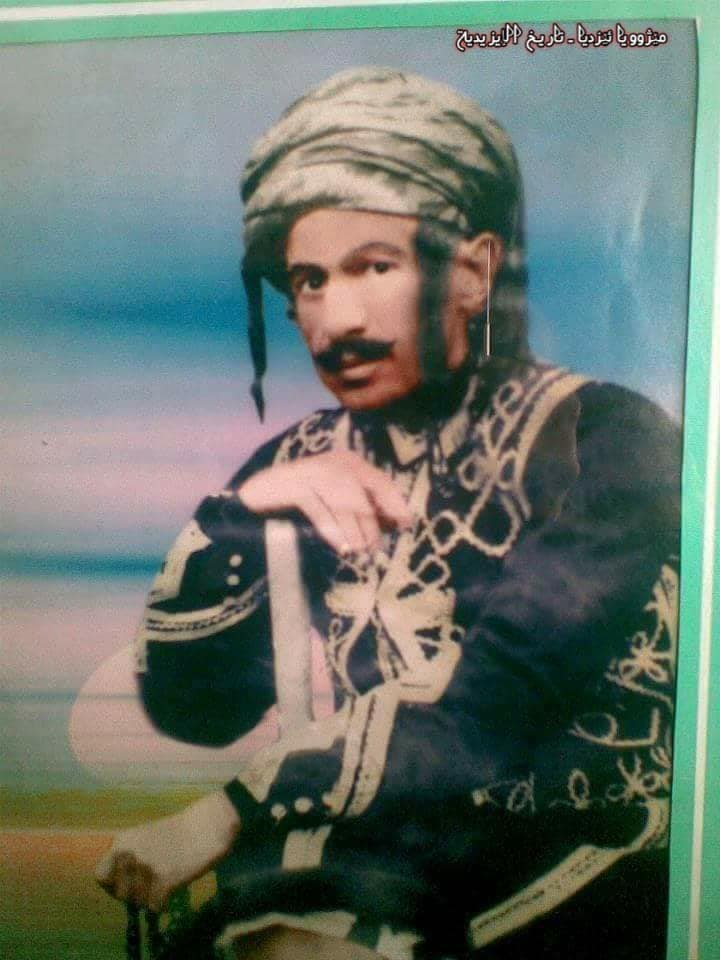
Ali Ramo chose to take refuge in Mount Shingal, specifically in the village of “Tiraf,” inhabited by the Masqura Janabiya tribe. He placed himself under the protection of its leader, “Safouk Mato Hussein,” historically known as “Safouk Dombly Pasha.” Safouk had wide political influence and strong relations with the Ottoman administration at the time, making the meeting between Safouk Dombly and Ali Ramo a turning point in the course of events.
Oral memory records an incident of deep social significance that coincided with Ali Ramo’s arrival: a child from Safouk Dombly’s grandchildren died that night. Ali Ramo was deeply affected and wept bitterly, explaining to his host and ally, Safouk, that his tears were a lament for the misfortune of his arrival coinciding with a grave event in his host’s household. This reflects the moral sensitivity of the guest’s position within tribal custom.
Safouk Dombly’s Diplomatic Position and the Ottoman Settlement
Safouk Dombly’s response to the crisis of his “dakhil” — the person under his protection — represents an advanced model of risky tribal diplomacy. After hosting Ali Ramo for some time, Safouk made the bold decision to negotiate with the higher Ottoman authorities to end the crisis of his ally.
The symbolism of this stance appeared in Safouk taking two companions with him and carrying a “white cloth” as a shroud. He presented an unconventional political offer to the Ottoman administration: to offer his own head in place of the head of his protected guest, Ali Ramo. His message carried a profound humanitarian and social approach, as he pointed to his moral obligation to protect a “Muslim” refugee while he himself was a “Yazidi” leader. He insisted on either issuing a full pardon for the protected guest or executing him instead, in strict commitment to the laws of the institution of tribal protection.
Historical Results and Consequences
This political maneuver, marked by courage and strict adherence to the customs of tribal protection, produced key outcomes in the history of the region:
- Sultanic Pardon: The Ottoman authorities showed admiration and appreciation for Safouk Dombly’s position, which led to an official decision to pardon Ali Ramo.
- Political Promotion: Safouk Dombly was officially granted the rank of “Pasha” over all of Mount Shingal, strengthening his administrative and political status within the state.
- Demographic Stability: Ali Ramo preferred to remain in Shingal, where he brought one of his wives and settled there. He had sons, Hussein and Shaaban, performed the Hajj pilgrimage, and remained in the region until his death.
Ali Ramo was buried in the “al-Hasanki” cemetery in the village of “Haliqi,” north of Mount Shingal. His family descendants still exist in Shingal and the Kurdistan Region of Iraq to this day.
Comparison of Tribal Powers in Tora Hverka
| Leading Family | Parent Tribe | Prominent Historical Figures | Outcome of Power and Influence |
|---|---|---|---|
| Al Sheikha | Former Hverkan confederation | Not precisely identified in this period | Their authority faded, and their role was reduced to historical memory. |
| Al Ali Ramo | Arabiyan tribe | Ali Ramo | Direct influence declined; they shifted to a mediating role and later settled in Shingal. |
| Al Osman | Ilikan tribe | Osman, Hajo I, Hasan I | Expanded influence beyond the tribal sphere and later dominated the region. |
References
- Mousa, Ghada (2025). The Kurdish-Ottoman Conflict and the End of the Kurdish Emirates Era. Al-Mubadara Center for Studies and Research. Link: almoubadara.com
- Haruri, Salah (2000). The Bohtan Emirate during the Reign of Emir Bedir Khan. Khani Press, Duhok, p. 47.
- Jabbo, Nazir (2018). The Sultans of Hverkan: A Page from Kurdish History.
- Mahmoud, Ibrahim (2020). The Kurdish State of Hajo Agha.